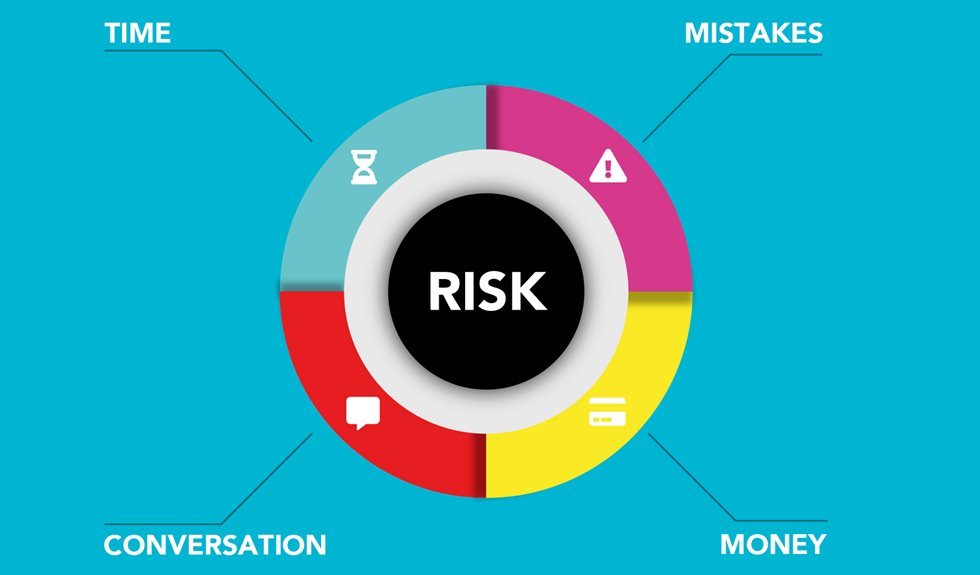
Recurring errors that reappear demand a disciplined, data-driven approach. Identify recurring signals with timestamps, then reproduce failures in safe, repeatable tests that isolate variables and define clear success criteria. Trace root causes by analyzing input patterns, sequences, and correlations, mapping user flows to fault origins, and monitoring latency and data drift. Implement minimal, verifiable fixes and validate stabilization against predefined criteria, while maintaining structured records and evidence-driven progress to support continuous improvement.
Identify the Recurring Error Signals You See
Identifying recurring error signals begins with a systematic cataloging of symptoms observed across incidents. The approach emphasizes consistent data collection, timestamped records, and contextual notes to illuminate patterns. Each signal—from minor anomalies to major faults—serves as data for error signaling and failure diagnostics. Analysts compare frequency, severity, and correlation, distinguishing noise from meaningful indicators guiding targeted remediation. Concise documentation reinforces transparency and progress.
Reproduce Failures With Safe, Repeatable Tests
Reproducing failures with safe, repeatable tests requires a controlled, documented approach that isolates variables and preserves system integrity. The approach emphasizes actionable testing steps, repeatable environments, and clear success criteria. Data-driven observations guide fault isolation, enabling designers to reproduce symptoms without introducing new risks. Thorough test scaffolds minimize variance, ensure consistency, and support confident decision-making during failure verification and remediation planning.
Trace Root Causes Across Data and Input Patterns
What patterns in data and input streams best reveal fault propagation, and how can those patterns be leveraged to trace root causes?
The analysis surveys sequences, timestamps, and correlation signals to map user sessions and flows. It ignores edge case logging and validation failures, focusing on monitor latency spikes, data drift, and reproducible anomalies to localize fault origins efficiently. This disciplined, freedom-friendly approach informs targeted investigations.
Implement Targeted Fixes and Validate Stabilization
Implement targeted fixes and validate stabilization through a structured, evidence-driven workflow. The process identifies root causes via controlled experiments, monitors error signals, and applies minimal, verifiable changes. Each adjustment is documented with expected versus actual outcomes, reinforcing traceability. Validation uses predefined acceptance criteria and replication across input patterns, ensuring robustness. Results inform ongoing improvement and stabilize performance without compromising freedom and adaptability.
Frequently Asked Questions
How Do I Verify Error Signals Without Full Data Access?
The question: verify error signals without full data access requires proxy indicators, documentation review, and anomaly detection on limited streams; practitioners assess error signals, validate with summaries, and rely on metadata and coarse-grained data access controls.
What Benchmarks Ensure Test Repeatability Across Environments?
Irony paints a calm chorus as error signals flicker; data access constraints mute none. The answer outlines environment benchmarks, test repeatability metrics, and standardized procedures to ensure consistent results across platforms, guiding freedom-loving teams through rigorous, data-driven verification.
How Quickly Should Root Causes Be Traced and Confirmed?
Root causes should be traced and confirmed within urgent timelines, balancing speed with verification; practitioners emphasize a structured, data-driven approach to establish root cause visibility, enabling timely corrective action while preserving freedom to innovate and iterate.
Which Metrics Best Indicate Stabilization After Fixes?
Stabilization is best indicated by consistent, low error signals and robust data observability metrics; trending downward error signals, stable MTTR, and reproducible validation results signal readiness for release, with dashboards and audits supporting freedom through transparency and rigor.
How Can I Prioritize Fixes When Signals Conflict?
A theory suggests prioritization strategies emerge from balancing business impact and reliability signals; thus, when signals conflict, the method reconciles by ranking fixes via impact-weighted risk, tracing failures, and iterating until signal reconciliation stabilizes critical paths.
Conclusion
In a rigorously detached, data-driven lens, the investigation culminates in a tapestry of precise signals, reproducible tests, and disciplined root-cause mapping. Recurring errors are cataloged with exact timestamps, input patterns, and latency benchmarks, enabling pinpoint isolation. Targeted fixes are implemented with minimal scope, validated against stringent acceptance criteria, and documented step by step. The result is transformative clarity: a stabilized system whose performance is verifiably resilient, evidence-backed, and endlessly improvable, ensuring predictable behavior under evolving conditions.